Why Are You Still Guessing Your Way Through Healthy Eating When Your Cart Could Guide You?
We’ve all stood in the grocery aisle, staring at labels, wondering: Is this really good for me? I’ve been there—overwhelmed, unsure, buying what looks “healthy” but never seeing results. What if your shopping cart could quietly help you make better choices, track your goals, and support your journey—without judgment or apps to juggle? This isn’t about perfection. It’s about progress, one smart choice at a time. And the truth is, you don’t need another diet plan. You need a little help in the moments that matter most—like when you’re holding a cereal box, trying to decide between the one with hidden sugar and the one that truly fuels your family.
The Daily Struggle: When Grocery Shopping Feels Like a Diet Test
Let’s be honest—grocery shopping shouldn’t feel like a final exam. But if you’re trying to eat better, it often does. You walk in with good intentions, maybe even a list, but then you’re hit with a wall of choices. Low-fat or low-carb? Organic or affordable? Gluten-free or just plain tasty? And don’t get me started on labels that say ‘natural’ but list 15 ingredients you can’t pronounce. I remember standing in front of the yogurt case, holding two containers, trying to figure out which one had less added sugar. One said ‘fruit on the bottom,’ but the other had ‘probiotics.’ I ended up buying both, feeling like I’d failed before I even got home.
It’s not just about reading labels. It’s the mental load—the constant decisions, the guilt, the second-guessing. You’re not just shopping for yourself. Maybe you’ve got kids who only eat beige food, a partner who claims they want to eat healthy but still grabs the chips, and your own energy levels that seem to crash by 3 p.m. no matter what you do. The pressure builds. And over time, that pressure turns into something heavier: shame. You start to believe you’re the problem. But here’s the truth—*you’re not*. The system is. We’re expected to be nutrition experts, time managers, budget planners, and chefs—all while standing in an aisle under fluorescent lights.
And let’s talk about decision fatigue. By the time you’ve picked out milk, bread, and bananas, your brain is already tired. That’s when the candy bar near the register wins. It’s not because you lack willpower. It’s because you’ve made dozens of small decisions already, and your mental reserves are low. Research shows that the more choices we make in a day, the worse our decisions get. So by the time you reach the snack aisle, you’re not thinking clearly. You’re just trying to get out of there. What if, instead of fighting yourself every week, your shopping cart could help carry the load? Not by taking over, but by being a quiet partner—someone who remembers your goals when you’re too tired to remember them yourself?
Meet the Smarter Cart: Technology That Understands Your Goals
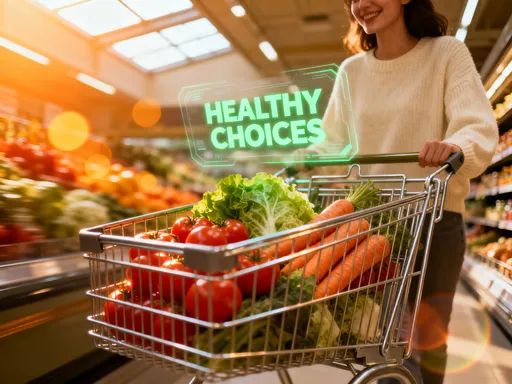
Imagine a shopping cart that doesn’t just roll—it helps. Not in a flashy, futuristic way, but in a simple, human way. This isn’t about robots or voice assistants yelling at you. It’s about a cart that gently supports your goals, one scan at a time. Think of it like a friend who knows your habits, your family’s needs, and your quiet hopes for feeling better. It doesn’t judge. It doesn’t nag. It just shows up and says, ‘Hey, you’ve been doing great with veggies this week. Want to keep that going?’
Here’s how it works. When you start your shopping trip, the cart recognizes you—maybe through a simple app login or a loyalty card. You’ve already set a few quiet goals: more fiber, less sodium, maybe one treat per week. As you scan items, the cart keeps track. It doesn’t scream ‘STOP’ when you pick up cookies. Instead, it might say, ‘You’re at 80% of your weekly sugar goal. This pack has 12 grams per serving. Still want to add it?’ No guilt. Just information. And if you say yes? Great. You’re in charge. But now you’re choosing with your eyes open.
I tried a demo version at a local store last month, and honestly, it changed how I shopped. I was reaching for my usual granola bar—tasty, but full of hidden sugar—when the cart screen lit up with a soft green bar: ‘High in added sugars. Try one with nuts and oats instead?’ Then it suggested two options already in my past purchases. One had half the sugar and twice the fiber. I’d never noticed it before. I grabbed it, and you know what? It tasted better. The tech didn’t make the decision for me. It just gave me a nudge at the right moment. That’s the power of context. When support shows up *in the moment of choice*, it actually works.
And here’s what I love: it’s not another app to manage. No more switching between your grocery list, your fitness tracker, and your meal planner. The cart brings it all together in one place—where the decisions happen. It’s seamless, private, and designed for real life. You don’t need to be tech-savvy. You just need to shop. And the more you use it, the better it gets at understanding your rhythm. It remembers that you buy spinach every Tuesday. It notices you skip dairy on weekends. Over time, it learns what ‘healthy’ means *for you*, not some generic diet plan.
From Calories to Confidence: Tracking Progress Without Obsession
Let’s talk about tracking. For so many of us, that word comes with baggage. We think of counting every calorie, weighing portions, or stepping on a scale every morning. And for some, that kind of tracking helped. But for others, it became a source of stress—another thing to get right, another way to feel like we were failing. What if tracking wasn’t about restriction, but about awareness? What if it felt less like a report card and more like a highlight reel of your progress?
That’s what cart-based tracking offers. Instead of asking you to log meals after the fact, it quietly records what you buy. No extra work. No memory games. Then, at the end of the week, it shows you a simple summary: ‘You bought 30% more fresh produce than last month.’ Or ‘Your average sodium per item is down 15%.’ No numbers on a scale. No guilt about that slice of cake at the birthday party. Just a clear picture of the trends—the real, sustainable changes you’re making.
I showed my sister the weekly report from my cart, and she said, ‘Wait, you’ve been buying broccoli every week?’ I hadn’t even realized it. But seeing it in black and white made me proud. It wasn’t perfect—I still bought frozen pizza twice—but the overall direction was up. That’s the shift: from perfection to progress. The cart doesn’t care if you eat clean 100% of the time. It celebrates the 80% where you’re trying. And over time, those small wins add up to real change.
Think of it like a garden. You don’t pull up the weeds every day and measure the growth. You water, you tend, and every few weeks, you step back and say, ‘Wow, look how much it’s grown.’ That’s what this kind of tracking feels like. It gives you space to breathe, to make mistakes, and still see how far you’ve come. And when you can *see* your progress, you’re more likely to keep going. It’s not magic. It’s momentum.
The Family Factor: Eating Well Becomes a Shared Journey
One of the biggest myths about healthy eating is that it’s a solo journey. But if you’re a mom, a partner, or anyone who cooks for others, you know that’s not true. You’re not just feeding yourself. You’re feeding a household. And that means compromise, negotiation, and sometimes, frustration. I’ve had nights where I made a beautiful roasted vegetable bowl, only to hear, ‘Where’s the pasta?’ from the back seat. It’s not that my family doesn’t care. They just have different tastes, different habits, and sometimes, different priorities.
That’s where the smart cart becomes more than a personal tool—it becomes a family ally. Imagine setting shared goals: ‘Let’s eat three plant-based meals a week,’ or ‘Let’s keep sodium under 2,000 mg per day.’ The cart remembers those goals and helps everyone stay on track. When you scan a can of soup, it shows the sodium level and suggests a lower-salt version. When your teen reaches for soda, the cart might say, ‘You’re at 90% of your weekly added sugar. Want to try sparkling water with lemon?’ It’s not about control. It’s about conversation. And over time, those little moments add up to new habits—for everyone.
My nephew, who’s ten, started noticing the cart’s gentle prompts. He asked me why one cereal had a green leaf icon and another had a yellow warning. We talked about sugar and energy. He didn’t feel lectured. He felt curious. Now, he sometimes says, ‘Let’s pick the one that helps Grandma feel good.’ That hit me right in the heart. This isn’t just about food. It’s about values. It’s about teaching the next generation that eating well isn’t punishment—it’s care.
And for couples? It can ease the tension around food choices. No more passive-aggressive comments about the ice cream in the freezer. Instead, you see a shared dashboard: ‘This week, you both chose 5 low-sodium meals. Great teamwork!’ It turns healthy eating from a source of conflict into a shared mission. And when you’re in it together, it feels lighter. You’re not policing each other. You’re supporting each other. And that makes all the difference.
Beyond the Aisle: How Small Choices Build Lasting Change
Change doesn’t happen in big leaps. It happens in tiny, almost invisible steps. You don’t wake up one day and suddenly eat perfectly. You start by swapping one snack. Then another. Then you notice you’re buying more apples and fewer cookies. A month later, you realize you haven’t felt that 3 p.m. crash in weeks. That’s how real transformation works—quietly, steadily, without fanfare.
I think of a woman I met at a wellness event who told me about her year with the smart cart. She didn’t set out to ‘get healthy.’ She just wanted more energy. She used the cart casually at first—no big goals, no strict rules. But over time, the nudges added up. She started choosing whole grains without thinking. She bought frozen berries instead of syrupy fruit cups. She didn’t feel deprived. She just felt… better. Six months in, her doctor said her blood pressure was in the normal range for the first time in years. She cried. Not because it was perfect, but because she hadn’t even realized how far she’d come.
That’s the power of small, consistent choices. The cart didn’t force her. It didn’t shame her. It just made the better choice easier to see, easier to make. And over time, those choices became habits. Habits became health. Health became confidence. And confidence changed how she showed up in her life—more present, more patient, more alive.
This isn’t about chasing a number on a scale. It’s about building a life where you feel strong, clear, and capable. Where you’re not constantly fighting yourself. Where your food choices support your days instead of sabotaging them. And the best part? You don’t need willpower to get there. You just need a little help at the right moment. The grocery store is where it all begins. It’s where the week’s meals are decided. And if we can make that moment easier, kinder, more supportive, then we’ve changed more than eating habits—we’ve changed lives.
Privacy and Peace of Mind: Technology That Respects You
I know what you’re thinking: ‘Great, another tech tool that tracks everything I do.’ And I get it. We’re tired of being watched. Tired of ads that know our secrets. Tired of feeling like our data is someone else’s product. So let’s be clear: this isn’t that. The smart cart isn’t designed to sell your habits to advertisers. It’s not sending your grocery list to a cloud server where who-knows-who can access it. It’s not pushing coupons for junk food because you bought chips once.
Instead, it’s built on a simple principle: your data belongs to you. Most systems store information locally on the cart or in a private, encrypted account. You decide what to share, if anything. Want to keep it all to yourself? Done. Want to share your weekly report with your doctor? You can choose that too. But no third parties. No surprise pop-ups. No data mining. It’s like a personal journal for your food journey—private, secure, and yours alone.
And the prompts? They’re not based on profit. They’re based on your goals. If you care about fiber, the cart helps you find high-fiber foods. If you’re managing sugar, it highlights lower-sugar options. It’s not trying to sell you anything. It’s trying to support you. That trust is everything. Without it, no tool—no matter how smart—will work. Because real change only happens when you feel safe, respected, and in control.
So yes, this is technology. But it’s technology with heart. It’s not cold or calculating. It’s warm, quiet, and deeply human. It understands that you’re not a data point. You’re a person—with a family, a schedule, a history, and hopes for the future. And it’s here to help, not to judge.
A New Kind of Wellness: Where Technology Meets Self-Care
At the end of the day, healthy eating isn’t about rules. It’s about care. It’s about looking at your body and saying, ‘You matter. You deserve fuel that helps you feel good.’ It’s about looking at your family and saying, ‘I want us to have energy, to be present, to live well.’ And it’s about giving yourself grace when you don’t get it right.
The smart shopping cart isn’t a miracle. It’s a mirror. It reflects your choices, not to shame you, but to help you see them clearly. It’s a companion on a journey that’s often lonely. It’s a quiet voice that says, ‘I see you. I’m here. You’ve got this.’
Imagine a future where technology doesn’t add to your stress, but eases it. Where it doesn’t demand more from you, but gives back. Where it meets you in the messy, beautiful reality of daily life and says, ‘Let me help.’ That’s the promise of this tool. Not perfection. Not pressure. Just progress—gentle, consistent, and deeply personal.
Your journey isn’t about being flawless. It’s about being seen. Supported. Moving forward. And sometimes, the smallest help—at the most ordinary moment—can make the biggest difference. So the next time you’re in the grocery aisle, wondering what to choose, remember: you don’t have to guess anymore. Your cart’s got your back. One smart choice at a time.