I thought I had no time for Mom — How a simple commute app gave me back our afternoons
Life moves fast, and so do our parents. I used to tell myself, “I’ll call Mom tomorrow,” only to realize weeks had passed. Between work, errands, and traffic, my daily commute felt like lost time. Then I found a little app that changed everything—not by speeding up the drive, but by helping me *use* it. Now, those 30 minutes in the car are when I check in on Mom, remind her to take her pills, or just hear her laugh. It didn’t fix everything, but it gave us something precious: connection.
The Guilt of "No Time"
How many times have you looked at your phone and realized you haven’t called your mom in over a week? Not because you don’t care—because life just… happened. You got stuck in a meeting. The kids needed help with homework. The dog threw up on the rug. And suddenly, another day slips by without that check-in. I’ve been there. More than once. I love my mom deeply—she raised me, taught me how to make her famous chicken soup, held my hand through every heartbreak. But lately, it felt like my love wasn’t showing up in the ways that mattered.
I’d drive home from work, exhausted, and see her missed call from three hours ago. Guilt would hit like a wave. Not anger, not frustration—just this quiet ache. I wanted to be the kind of daughter who remembered to ask how her doctor’s appointment went. Who didn’t need to be reminded when her birthday was. But between emails, grocery runs, and trying to squeeze in five minutes of quiet, it was easy to let things slide. And then one day, she mentioned offhand, “I just wish I heard from you more.” It wasn’t an accusation—just a soft, honest truth. And it broke my heart.
We often think of caregiving as something big: moving in, managing medications, going to appointments. But for most of us, it’s the small things that matter most. A daily “how are you?” A reminder to drink water. Knowing she didn’t fall. These tiny moments build trust, safety, and love. The problem? We don’t have a system. We rely on memory, and memory fails—especially when we’re juggling a million things. That’s when I started wondering: what if technology could help me be a better daughter, not by doing the caring for me, but by helping me show up?
My Commute Was Wasted Time—Until Now
Let’s be real—my commute used to be the worst part of the day. Thirty minutes each way, stuck in traffic, listening to the same radio station cycle, mentally running through my to-do list. I’d arrive at work already drained. And on the way home? Same thing, but now I was thinking about dinner, laundry, and that project due Friday. It felt like lost time—time I couldn’t get back, time I wasn’t spending with the people I loved.
Then one day, I started asking myself: what if I stopped seeing my commute as dead time? What if, instead of letting it drain me, I used it to *give*? I didn’t need more hours in the day—just better use of the ones I already had. That’s when I downloaded a simple time-tracking app. Not for work. Not for fitness. For my mom.
At first, it felt silly. I mean, I’m a grown woman using an app to remember to call my mom? But here’s the thing—it worked. I set a recurring reminder for 5:15 p.m., right in the middle of my drive home. Just a little chime: “Call Mom – 30-minute check-in.” No pressure. No guilt. Just a gentle nudge. And slowly, something shifted. Instead of dreading the drive, I started looking forward to it. That 30 minutes became *our* time. No distractions. No multitasking. Just me, the road, and her voice on the other end.
I began using the app to track other things too—like when she took her blood pressure meds, or if she’d gone for her walk. I wasn’t micromanaging her life. I was just creating space to care. And honestly? It changed everything.
How Time-Tracking Became a Caregiving Tool
I’ll admit it—I didn’t design this app for elder care. It was built for productivity, for tracking work tasks and building better habits. But life doesn’t come in neat categories. Love doesn’t follow a corporate workflow. So I got creative. I repurposed the app’s reminder system to support my mom’s daily routine. Instead of “Finish report by 3 p.m.,” I set “Call Mom – ask about lunch” or “Check if she opened the mail today.”
The beauty of it was in the simplicity. No complicated setup. No syncing with doctors or pharmacies. Just gentle, consistent prompts that helped me stay connected. I used the habit-tracking feature to log small wins: “Mom took her vitamins,” “She spoke to her sister today,” “Walked around the block.” It wasn’t about surveillance—it was about awareness. And over time, I started to notice patterns. Like how she seemed brighter on days she got outside. Or how her appetite dipped when the weather changed.
The app didn’t replace my attention—it multiplied it. I wasn’t checking in because I felt guilty. I was checking in because it was part of my routine, as natural as brushing my teeth. And that consistency made all the difference. My mom started expecting my call. She’d say, “I knew you’d ring—I saved the funniest story just for you.” That kind of anticipation? That’s connection. That’s love in action.
And the best part? It wasn’t just helping her—it was helping me. I felt less anxious. Less scattered. I wasn’t trying to remember everything in my head anymore. The app held the details, so I could show up with my heart.
Real Talk: A Call That Changed Everything
One Tuesday, the reminder popped up: “Call Mom – 30-minute check-in.” I tapped it, put her on speaker, and started driving. She answered, but her voice was slower than usual. Flat. Not her normal “Hi, sweetheart!” that always made me smile. I paused. “Mom? You okay?”
She said she was tired. Just hadn’t slept well. But something in her tone made me stay on the line longer. I asked about her lunch. She said she wasn’t hungry. Then I asked if she’d taken her meds. She paused. “I think so… I’m not sure.” That’s not like her. She’s usually so on top of things.
I stayed on the phone, asking gentle questions. How was her energy? Any dizziness? Pain? She mentioned feeling a little weak, especially in the afternoons. I made a note in the app—“Low energy, possible missed meds”—and called her doctor the next morning. Turns out, her blood pressure was a bit low. Nothing serious, but enough to explain the fatigue. With a small medication adjustment, she was back to her usual self in a few days.
Here’s what hit me: I wouldn’t have noticed if I hadn’t called that day. I wouldn’t have caught it early. And it wasn’t luck. It was the routine. The app didn’t diagnose her. It didn’t replace the doctor. But it *created space for attention*. It gave me the chance to listen, to notice, to care—when it mattered most.
That experience changed how I saw the app. It wasn’t just a tool for time management. It was a tool for *presence*. For showing up, even when I wasn’t physically there. And that? That’s priceless.
Building a Routine That Works—Without Stress
Let’s be honest—caregiving can feel overwhelming. It’s easy to burn out, especially when you’re trying to do it all on your own. I didn’t want this system to become another source of pressure. I didn’t want to feel like I *had* to call, or that I was failing if I missed a reminder. So I designed it to be gentle. Flexible. Human.
The key was simplicity. I didn’t overload the app with 20 reminders a day. I started with just one—“Call Mom at 5:15.” Once that felt natural, I added a second: “Check if she took her morning meds.” That’s it. Small steps. No perfection required. If I missed a call because of traffic or a work emergency, I didn’t beat myself up. I just rescheduled. The app wasn’t judging me. It was supporting me.
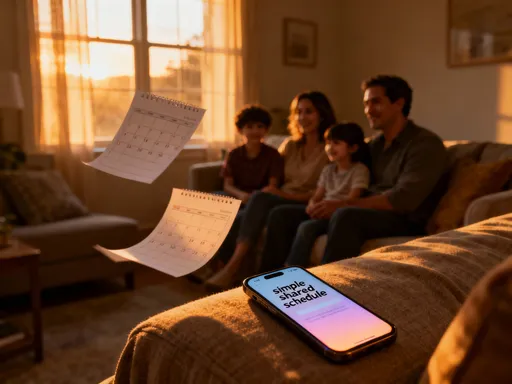
I also shared access with my sister. We both use the same app, so we can see when the other checked in. It’s not about double-checking—it’s about teamwork. If I’m traveling, she knows to call. If she’s busy, I cover. We leave little notes for each other: “Mom loved the flowers you sent,” or “She’s in a great mood today.” It’s like a family care journal, hidden in plain sight.
And because the app tracks patterns over time, we can spot changes early. Like when Mom started skipping calls on rainy days—turns out, her arthritis flares up more then. So now, we call a little earlier, or send a voice note if she’s not up for talking. It’s not about fixing everything—it’s about understanding, adapting, and showing up in ways that actually help.
It’s Not Just About Time—It’s About Presence
I used to think being present meant being in the same room. That real connection only happened face-to-face. But over time, I’ve learned something different. Presence isn’t just physical—it’s emotional. It’s about showing up with your full attention, even if you’re miles apart.
Before the app, my calls with Mom were often rushed. “Hi Mom, I’ve got five minutes before my next meeting—how are you? Good? Love you, bye!” Not because I didn’t care—but because I was distracted. Now, because the call is scheduled, I prepare for it. I close my laptop. I turn off the radio. I take a deep breath. And when I dial, I’m really there.
She notices the difference. “You sound calmer,” she said once. “Like you’re really listening.” And I am. I hear the little things—the way she chuckles at her neighbor’s dog, the pride in her voice when she tells me she baked cookies, the quiet sigh when she’s tired. These moments aren’t small. They’re everything.
The app didn’t create this connection. Love did. But it gave us the structure to nurture it, even when life gets busy. It turned obligation into opportunity. And that shift? It’s changed our relationship in ways I never expected.
You Don’t Need a Miracle—Just a Little Help
You don’t need a high-tech dashboard. You don’t need to become a digital expert. You don’t even need a perfect schedule. What you need is one small thing that works—one tiny habit that helps you show up.
Maybe it’s a commute. Maybe it’s your morning coffee. Maybe it’s the 15 minutes before bed. Look at your day. Where could you carve out a little space to connect? And how could a simple tool—like a reminder app—help you do it consistently?
I’m not saying this fixes everything. My mom still has tough days. I still have busy weeks. But now, we have rhythm. We have touchpoints. We have moments of real, uninterrupted connection. And that makes all the difference.
Care doesn’t have to be grand. It doesn’t have to be exhausting. It can be as simple as a scheduled call, a shared note, a voice message sent from the car. It’s not about doing more—it’s about doing what matters, with intention.
So if you’ve been telling yourself, “I don’t have time,” I get it. But what if you already do? What if the time is there—hidden in your commute, your routine, your day—and all you need is a little help to use it?
You don’t have to be perfect. You just have to be present. And sometimes, the most powerful thing you can give someone you love is not a solution—but your attention. Let technology hold the details. You bring the heart.