From Overwhelmed to in Control: How Smart Settings Finally Made Saving Energy Effortless
You know that feeling—coming home after a long day, only to remember you left the heat blasting all afternoon? Or seeing your electricity bill and wondering where it all went? I’ve been there too. For years, I thought energy-saving meant sacrifice: cold showers, dim lights, constant monitoring. But what if technology could actually make it easy—so easy you barely have to think about it? That’s exactly what happened when I started using smart energy-saving settings with goal tracking. This isn’t about tech for tech’s sake—it’s about peace of mind, lower bills, and a home that works *with* your life, not against it.
The Daily Energy Struggle (And Why We Give Up)
Let’s be honest—most of us want to do the right thing. We care about the planet, we want to save money, and we’d love to use less energy. But when your day starts with school drop-offs, ends with dinner prep, and includes three work meetings in between, remembering to turn down the thermostat feels like just one more thing on an endless list. I used to walk through my house before bed like a detective, checking every room: “Did I unplug the iron? Is the living room fan still running? Was the garage door closed?” And even then, I’d wake up the next morning kicking myself for forgetting the kitchen lights.
The truth is, we weren’t built to remember every little switch and setting. Our brains are already full—full of to-do lists, appointments, and the mental load of managing a household. Trying to manually track energy use is like trying to lose weight by counting every bite without a scale or a plan. It’s exhausting. And when something feels like a constant chore, we stop doing it. Not because we don’t care, but because it’s too much effort. I used to feel guilty every time I got a high bill, like I’d failed. But the real failure wasn’t mine—it was the system. We were trying to manage modern homes with outdated habits.
Then I started asking myself: what if saving energy didn’t require willpower? What if it wasn’t about remembering, but about designing a home that remembers for you? That’s when I realized I didn’t need more discipline—I needed smarter tools. Tools that could take the mental load off and make conservation automatic, not an act of will. And that’s exactly what I found.
Discovering Goal Tracking in Everyday Tech
It all started with a fitness tracker. I’d never been a gym person, but I loved how my watch celebrated small wins—like hitting 7,000 steps or closing my activity rings. It didn’t judge me on the days I sat on the couch; it just gently reminded me the next day: “You’ve got this!” That positive reinforcement made me want to keep going. And it got me thinking: why don’t we have that for energy use?
Then I discovered that some smart home systems actually offer energy goal tracking—like a personal dashboard for your home’s energy habits. Instead of just telling me how much I used, they let me set a target: “Let’s reduce heating by 15% this month.” And every evening, I’d get a little update: “You’re on track!” or “Yesterday was warmer—maybe lower the thermostat tonight?” It wasn’t a scolding. It was a nudge, like a thoughtful friend checking in.
What changed everything was making energy use visible. Before, it was just a number on a bill once a month—too late to do anything about it. Now, I could see my usage in real time, compare it to last week, and adjust before the damage was done. It turned a vague, stressful goal—“save energy”—into something concrete, manageable, and even kind of fun. I wasn’t just guessing anymore. I had data, feedback, and a sense of progress. And that made all the difference.
How Smart Settings Learn (And Adapt) to You
I’ll admit, I was skeptical at first. I thought these systems would be rigid—like a robot dictator controlling my home temperature whether I liked it or not. But the reality was completely different. The best smart thermostats and energy systems don’t take over; they learn. It’s like teaching a new roommate your habits: when you like the house warm, when you prefer it cooler, when you’re usually out, and when you need comfort after a long day.
I started by manually adjusting the temperature at times I normally would—turning it down at night, warming the house before I got home. After a week or two, the system began doing it for me. It noticed patterns: I like it cooler in the mornings, warmer in the evenings, and the house can stay low when we’re at work. Over time, it got so good that I barely had to touch it. And if I wanted to override it—say, because we had guests or it was a snow day—I could. No frustration, no complicated menus. Just a simple tap or voice command.
What surprised me most was how intuitive it felt. I didn’t need to become a tech expert. I didn’t have to memorize settings or codes. It was like training a helpful assistant who actually listens. And when I forgot to adjust for an early departure, it would gently suggest: “You’re leaving in 30 minutes—want to lower the heat while you’re out?” Not a loud alarm, not a nagging pop-up—just a calm, timely reminder. That’s when I realized: this wasn’t about giving up control. It was about gaining a partner in managing my home.
Making Energy Saving a Family Effort
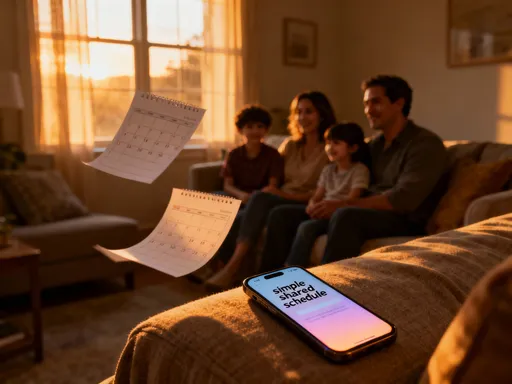
One of the biggest shifts happened when I stopped treating this as my personal project and invited my family in. At first, I worried they’d see it as another rule: “Don’t touch the thermostat!” But when I framed it as a shared goal—“Let’s see if we can beat last month’s energy use”—everything changed. We turned it into a little game, and the kids loved it.
We set up a family dashboard on the tablet in the kitchen. Every evening, someone would check the progress bar. “We’re at 85% of our goal!” my daughter would announce proudly. We started celebrating small wins—not with gifts, but with family perks. If we hit our target, we’d have a movie night at home with popcorn and cozy blankets. No driving, no spending, just us. It became a ritual we all looked forward to.
And here’s the thing: the technology didn’t replace conversations—it sparked them. Instead of me nagging, “Who left the back door open?” we’d get a friendly alert from the system: “Unusual heat loss detected in the kitchen.” Then it became a team effort: “Was that you, Dad?” “No, I think the dog pushed it!” We’d laugh, fix it, and move on. It wasn’t about blame. It was about awareness, together. And that made all the difference. Saving energy stopped being a chore and started feeling like teamwork.
Overcoming the Setup Hurdle (It’s Easier Than You Think)
I won’t sugarcoat it—when I first opened the box, I had that familiar wave of tech anxiety. “Do I need to be an engineer for this?” I wondered. Connecting the thermostat, syncing the app, naming rooms, setting up schedules—it felt like a weekend project I didn’t have time for. But here’s what I learned: most modern systems are designed for people like us—busy, not tech-obsessed, just looking for help.
The setup was actually guided, step by step, like a friendly tutorial. It asked simple questions: “What time do you usually wake up?” “When do you leave for work?” I spent one quiet Sunday afternoon doing it—just two hours, with a cup of tea and no distractions. And by dinner, everything was connected and running. The key was starting small. I didn’t try to smarten my whole house in one day. I began with the thermostat. A month later, I added smart plugs for the lamps and TV. Then motion-sensing lights in the basement. Each step built confidence.
And when I got stuck—like when my phone wouldn’t connect to the Wi-Fi—I called customer support. I expected a robot voice and a 45-minute wait. Instead, a real person answered in under five minutes and walked me through it calmly. No jargon, no frustration. Just help. That support made all the difference. Looking back, the hardest part wasn’t the tech—it was my own hesitation. Once I took that first step, the rest followed naturally. And now, when friends say, “I could never figure that out,” I tell them: “You don’t have to. The system teaches you as much as you teach it.”
Real Results: Lower Bills, Less Stress, More Confidence
After three months, I opened my electricity bill and did a double take. It was nearly 20% lower than the same period last year. And this was during winter—when heating costs usually spike. I didn’t change my lifestyle. I still like a warm house in the evenings. I still run the dishwasher and laundry. But now, those systems run at smarter times—when energy demand is lower, and rates are cheaper. The house heats up before I get home, but cools down when we’re out. Lights turn off automatically. Devices go into low-power mode. It’s not magic—it’s timing, automation, and awareness.
But the biggest change wasn’t on the bill. It was in my mind. I no longer lie awake wondering if I left the oven on or forgot to unplug the charger. The system handles it. I get alerts only when something’s unusual—like a water heater running nonstop, which once helped us catch a small leak before it became a disaster. That sense of safety, of being protected, is priceless.
I also feel more confident—not because I’ve become a tech genius, but because I found a system that respects my time and energy. It doesn’t demand perfection. It celebrates progress. And that shift—from guilt to empowerment—has changed how I see everything. I’m not just saving energy. I’m building a home that supports me, not drains me.
A Smarter Home, A Lighter Life
This journey wasn’t really about gadgets. It was about reclaiming peace. About trading anxiety for assurance, chaos for calm. Smart energy-saving settings didn’t make my house cold or my life restrictive. They made it more comfortable, more efficient, and more *mine*. They handle the background noise so I can focus on what matters—my family, my time, my well-being.
What I love most is how quietly it all works. I don’t have to think about it. I don’t have to remember. The system learns, adapts, and supports—like a quiet partner in the background of daily life. And when I do check in, I feel proud. Not because I did it all alone, but because I made a choice to make life easier.
If you’ve ever felt overwhelmed by the idea of saving energy, I want you to know: you don’t have to do it all at once. You don’t have to be perfect. Start with one device. Set one small goal. Celebrate one win. Let the technology carry some of the weight. Because the goal isn’t to be flawless—it’s to feel in control. And when your home works *with* you, not against you, that control becomes a quiet, steady kind of joy. That’s not just smart tech. That’s a smarter, lighter life.