From Sleepless Nights to Sweet Dreams: How Time-Blocking Apps Gave Me Back My Rest
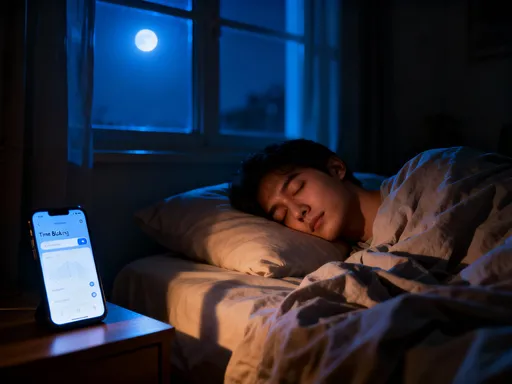
Ever lie in bed, exhausted, but your mind just won’t shut off? I’ve been there—staring at the ceiling, scrolling through my phone, wondering why sleep felt impossible. It wasn’t just stress; my days were chaotic, bleeding into nights with no rhythm. Then I discovered something simple but transformative: using sleep apps that don’t just play lullabies, but help me *plan* my day to protect my night. This isn’t about quick fixes—it’s about designing a life where rest comes naturally. And honestly, it changed everything.
The Midnight Struggle: When Your Brain Won’t Let You Sleep
It’s 2 a.m., and you’re wide awake. Your body is heavy, your eyes burn, but your brain is running a marathon. You replay that email you sent earlier—was it too blunt? Did you forget to sign the permission slip for your daughter’s field trip? What if you don’t finish the report on time? The to-do list grows longer in the dark, feeding on silence and stillness. You’re not alone. Millions of women—mothers, caregivers, professionals, homemakers—know this nightly ritual all too well.
I used to think it was just part of being a grown-up. That this constant hum of mental noise was the price of responsibility. But it wasn’t just keeping me up—it was stealing my joy, my patience, my energy. I’d snap at my kids over spilled cereal. I’d drag through work meetings, nodding along while secretly calculating how many hours of sleep I’d lost. My relationships felt strained, not because of big fights, but because I was never fully present. I was tired in a way that coffee couldn’t fix.
And here’s what I finally realized: the problem wasn’t just bedtime. It wasn’t the lack of a good pillow or the wrong room temperature. The real issue started much earlier—in the chaos of my days. When your schedule is a patchwork of interruptions, last-minute tasks, and digital pings, your nervous system stays in high alert. It doesn’t matter how many lavender-scented candles you light if your brain never got the memo that it’s safe to slow down.
Sleep isn’t something you can force. It’s not a switch you flip. It’s a state your body and mind enter when they feel secure, when the rhythm of your life says, “It’s okay to let go.” And for that, you need more than a bedtime routine—you need a whole-day routine.
Why Traditional Sleep Apps Fall Short
For years, I tried every sleep app on the market. I’ve listened to rainforest sounds, ocean waves, even simulated thunderstorms. I’ve followed guided meditations where a soothing voice told me to “imagine floating on a cloud.” I’ve worn sleep trackers that gave me detailed reports about my REM cycles—charts, graphs, scores. And while some of it helped a little, none of it solved the real problem.
Here’s why: most sleep apps treat the symptom, not the cause. They assume that if you just relax enough *at bedtime*, you’ll fall asleep. But if your day has been a whirlwind of back-to-back demands, if you’ve been switching between work emails, school pickups, grocery lists, and family needs without a moment to breathe, your brain doesn’t know how to shift gears. It’s like asking a race car to park smoothly after driving 100 mph through city traffic.
And let’s talk about those notifications. You know the ones—“You’ve been in deep sleep for 23 minutes!” or “Your heart rate spiked at 1:47 a.m.” Great, now I’m awake worrying about my sleep score. It’s ironic, isn’t it? Technology meant to help me rest ends up adding more data to obsess over.
What I needed wasn’t another sound loop or sleep stat. I needed a way to calm the chaos *before* it reached bedtime. I needed to stop treating rest like an afterthought—something to squeeze in if I had time. I needed a system that didn’t just track my sleep, but protected it by shaping my day.
The Hidden Link Between Daily Rhythm and Nightly Rest
Sleep doesn’t start when you climb into bed. It starts when you open your eyes in the morning. Your body runs on rhythms—circadian rhythms, to be exact—and they thrive on consistency. When you eat, when you move, when you focus, when you wind down—each of these moments sends signals to your brain about what time it is and what state you should be in.
Think of your nervous system like a thermostat. If your day is unpredictable—some days you work late, some days you skip lunch, some nights you watch TV until midnight—your internal thermostat gets confused. It doesn’t know whether to prepare for energy or rest. So it defaults to alertness, just in case. That’s why so many of us feel wired but tired: our bodies are exhausted, but our brains are still on high alert.
But when your day has rhythm—when you eat meals at similar times, take breaks between tasks, and protect time for quiet—it sends a clear message: “We’re safe. We’re in control. It’s okay to slow down.” And that message makes sleep not a battle, but a natural transition.
This is where time-blocking comes in. You might think of it as a productivity tool—something CEOs or students use to get more done. But I’ve come to see it as an act of self-care. When you block time for work, for family, for movement, and yes, for rest, you’re not just organizing your schedule. You’re teaching your brain that life is predictable, that there’s space for everything, and that rest isn’t a luxury—it’s built into the plan.
Meet the App That Plans Your Day to Protect Your Night
I wasn’t looking for another app. I was skeptical, honestly. I’d already tried so many, and most felt like digital to-do lists with extra steps. But then I found a different kind of tool—one that didn’t just ask me to schedule my tasks, but guided me in designing a day that supported my well-being.
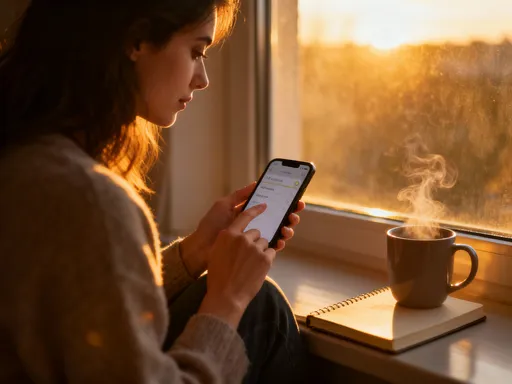
This app didn’t just let me drag and drop meetings. It asked questions like: “When do you feel most focused?” “What time do you usually eat dinner?” “How long do you want to wind down before bed?” Based on my answers, it created a personalized daily rhythm with color-coded blocks—deep work, light tasks, family time, movement, and, crucially, protected rest.
One feature that changed everything was the “wind-down window.” Starting two hours before my target bedtime, the app gently reminded me to shift modes. It suggested turning off bright lights, switching my phone to grayscale, and doing something calming—reading, stretching, journaling. It didn’t nag me; it felt like a kind friend saying, “Hey, it’s time to slow down.”
Another game-changer was the “focus sprint” feature. Instead of letting me work in a scattered way, it encouraged me to work in 90-minute blocks with breaks in between. I started to notice that when I respected those breaks—actually stepping away, walking outside, drinking water—I didn’t feel as drained by the end of the day. My energy lasted longer, and I didn’t need to push into the night to finish things.
And here’s the best part: the app learned from me. If I consistently skipped my morning walk, it adjusted the suggestion. If I often worked late on Wednesdays, it flagged that pattern and asked, “Is this sustainable?” It wasn’t rigid. It was adaptive, like a health consultation that evolves with your life.
How I Learned to Time-Block for Better Sleep (And You Can Too)
I won’t lie—starting was hard. I had to unlearn years of believing that being busy meant being important. I used to wear exhaustion like a badge of honor. “I only slept four hours—I got so much done!” Sound familiar?
But the first thing the app taught me was to track my energy, not just my tasks. I started paying attention to when I felt sharp, when I felt sluggish, when I needed a pause. I noticed that my brain was clearest in the morning, so I moved important work there. I realized that after lunch, I needed 20 minutes of quiet—no screens, no demands—just to reset.
One of the most powerful shifts was scheduling downtime like a meeting. I’d block 7:00 p.m. for “family walk” or 8:30 p.m. for “read and relax.” At first, it felt silly—like I was booking time to do nothing. But when I honored those blocks, something shifted. My kids started expecting our evening walks. My husband noticed I was less tense. And I began to fall asleep faster, not because I was more tired, but because my mind was quieter.
Here’s what I tell myself now when I’m tempted to skip rest: “You wouldn’t skip feeding your family. You wouldn’t skip paying the bills. Why skip recharging yourself?” Rest isn’t lazy. It’s strategic. It’s how you stay strong, present, and kind. And when you treat it as non-negotiable, everything else improves.
If you’re new to time-blocking, start small. Pick one part of your day—maybe your morning or your evening—and block just one hour for something that truly refuels you. It could be tea and a book, a phone call with a friend, or just sitting in the garden. Protect that time like it matters—because it does.
Beyond the Individual: How This Changed My Home Life
The most unexpected benefit? My whole family started sleeping better. I didn’t force anyone to change. I just changed my own rhythm—and they followed.
When I started going to bed earlier, my kids noticed. “Mom, you’re not on your phone at night anymore,” my daughter said one evening. “It feels calmer.” We began having screen-free dinners more often. No phones on the table. Just us, talking, laughing, sometimes sitting in comfortable silence. And because I wasn’t rushing to finish work after bedtime, I could actually be present.
My son, who used to stay up late gaming, started joining me for our evening walks. “It’s kind of nice,” he admitted. “I sleep better when I’m not on the screen.” Even my husband adjusted—he started winding down earlier, reading instead of scrolling. Our bedroom, once a place of stress and late-night whispers about bills and schedules, became a sanctuary.
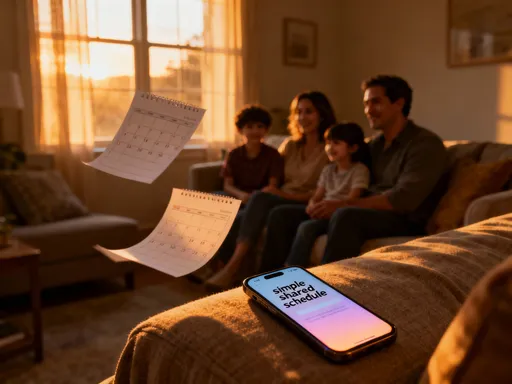
The app didn’t fix everything overnight. But it gave us a shared language for rest. We started talking about energy, not just time. “Are you running low?” became a normal question, like “Are you hungry?” We learned to respect each other’s need for space and quiet. And that made us kinder, more patient, more connected.
Technology often gets blamed for pulling families apart. But this was different. This was tech that helped us come together—by helping me come back to myself first.
Rest Is Not a Reward—It’s the Foundation
We’ve been sold a lie: that rest is something you earn after you’ve done enough, been enough, given enough. But that’s backward. Rest isn’t the reward for a successful life. It’s the foundation of one.
When you protect your sleep, you’re not being selfish. You’re being wise. You’re giving yourself the strength to show up—for your family, your work, your dreams. You’re giving your body the chance to heal, your mind the space to think clearly, your heart the peace to love well.
And here’s the beautiful paradox: when you stop chasing productivity and start honoring your natural rhythms, you actually get more done. Not because you’re pushing harder, but because you’re working with your energy, not against it. You’re not burning the candle at both ends—you’re keeping the flame steady.
Using a time-blocking app didn’t turn me into a perfect planner. I still have messy days. I still forget things. But now, I have a rhythm to return to. I know that even on chaotic days, I can protect one hour for calm, one evening for connection, one night for deep, unbroken sleep.
Peace isn’t something that happens by accident. It’s built—block by block, choice by choice, day by day. And when you use technology not to do more, but to be more intentional, you create a life where rest isn’t a luxury. It’s the quiet, steady heartbeat of everything that matters.