More Than Just Recipes: How Tech Quietly Fixed Our Family’s Kitchen Chaos
Remember those Sunday dinners where everyone argued over whose turn it was to write down Grandma’s pie recipe? We’ve all been there—sticky notes lost in drawers, ingredients guessed, traditions slipping. I thought we’d never get it right. Then, something unexpected happened. A simple app didn’t just organize recipes—it brought us closer, reduced stress, and saved hours. It wasn’t about technology; it was about finally preserving what mattered, one shared meal at a time.
The Messy Reality of Family Recipes
For years, our family’s most treasured recipes lived in chaos. My grandmother’s apple pie—crust flaky, filling just sweet enough—was scribbled on a yellowed index card stained with butter and cinnamon. My aunt’s slow-simmered beef stew lived in her memory, passed down orally with phrases like “until it smells right” and “a splash more wine.” My sister had her own version, slightly different, because she once misheard the amount of thyme. And then there was the infamous chocolate cake—written on the back of a grocery receipt, now lost forever after a kitchen drawer overflowed during a spring cleaning.
At first, I didn’t think much of it. Recipes were just instructions, right? But over time, I realized we weren’t just losing ingredients—we were losing moments. The way Mom used to laugh when she forgot the salt and had to start over. The way Grandpa would wink before adding a secret pinch of cinnamon to the mashed potatoes. Those weren’t just quirks—they were threads in the fabric of who we were. And when the cards went missing or the stories faded, it felt like a piece of us had disappeared too.
I started asking other women in my book club, my church group, even moms at the school pickup line. How do you keep your family recipes? Most gave the same tired smile. “Oh, they’re around somewhere,” one said. “I think my sister has the lasagna one.” Another admitted she’d been meaning to write them down for ten years. There’s a quiet grief in that—a slow, unnoticed erosion of something precious. We don’t realize how much we rely on these shared meals until they’re gone. And when we try to recreate them, the pressure makes us anxious. Was it two eggs or three? Did we brown the meat first? Suddenly, cooking isn’t joyful—it’s a test we’re afraid to fail.
How We Tried (and Failed) to Keep Traditions Alive
Determined not to lose more, I launched what I called “The Recipe Rescue Project.” I bought a beautiful leather-bound binder with gold-edged pages, the kind you’d see in a fancy kitchen catalog. I labeled tabs by course: Appetizers, Mains, Desserts. I scanned old cards, printed photos of handwritten notes, and even typed up my mom’s rambling instructions into neat bullet points. I felt proud. This was going to work.
Then reality hit. My sister borrowed the binder for Thanksgiving and left it in her car—soaked by a rainstorm that came through an open window. My nephew drew on two pages with a permanent marker. And when I tried to update a recipe, I had to reprint the whole thing and re-scan it. It wasn’t just inconvenient—it was discouraging. The more effort I put in, the more it felt like a chore, not a celebration.
We tried video next. I set up my phone in the kitchen while Mom made her famous chicken pot pie. “Now I add the broth slowly,” she said, stirring with her left hand. But the audio was muffled by the running faucet. The lighting was terrible. And when I watched it later, I realized I’d forgotten to film the part where she rubbed butter into the crust. I asked her to do it again. She sighed. “I just wanted to cook, honey.”
That moment stuck with me. We were so focused on preserving the recipe that we’d forgotten the point—being together. The tools we used weren’t helping; they were getting in the way. They demanded perfection, but family cooking is messy, improvisational, full of laughter and mistakes. I began to wonder: was there a way to honor the tradition without turning it into homework?
The App That Changed Everything—And Why It Wasn’t What I Expected
It started with a gift. My daughter, who works in tech, sent me a link one day. “Try this,” she said. “It’s for recipes, but it’s actually kind of sweet.” I rolled my eyes. Another app? But I downloaded it anyway, mostly to be polite.
The first thing I noticed was how simple it was. No complicated menus, no flashy graphics. I took a photo of Grandma’s pie recipe, typed in the ingredients, and saved it. Then I invited my sister to join. Within minutes, she added her version of the stew, with a note: “Use red wine, not white—Aunt Carol taught me this.” That small detail—her voice in text form—made me smile. It wasn’t just a recipe; it was her voice, her memory, right there on my screen.
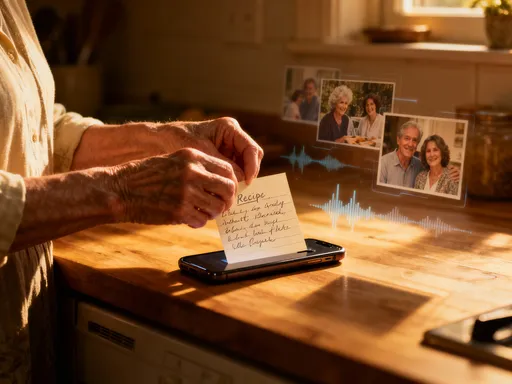
But the real magic came from the little things. The app saved every edit, so we could see how a recipe evolved. When my mom updated her cornbread, we could see the date, the time, even the weather if she’d enabled location (she joked that “cornbread needs humidity to rise properly”). And then there were the voice notes. When Aunt Linda whispered, “Add a pinch of nutmeg—don’t tell Mom,” it wasn’t just a cooking tip. It was a family joke, preserved forever. I played it back three times, laughing each time.
What surprised me most was how human it felt. I expected cold, sterile efficiency. Instead, the app felt like a shared kitchen table. We weren’t just storing data—we were sharing stories. The design was smart, yes, but it was the emotional intelligence behind it that won me over. It didn’t demand perfection. It welcomed messiness. A blurry photo? No problem. A half-remembered ingredient? Just add a note: “I think it was rosemary?” The app didn’t judge. It just held space for us to be ourselves.
From Chaos to Calm: How One Tool Reduced Weekly Stress
Before the app, our holiday dinners were mini disasters. The week before Thanksgiving, I’d get at least five calls: “Are you bringing the green bean casserole?” “Did someone already make the rolls?” “Wait, who’s in charge of the gravy?” We’d double up on dishes, forget others entirely, and show up stressed and tired, carrying Tupperware like we were in a relay race.
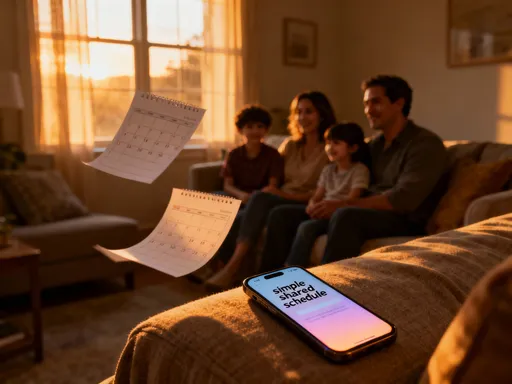
Now, everything lives in one place. The app has a meal planner, and when we decide on a menu, we assign dishes with a tap. It shows who’s making what, and everyone gets a reminder three days before. No more guessing. No more frantic texts at 3 p.m. on Thanksgiving Day. Even better, the grocery list auto-generates based on all the recipes. If I’m making the pie and my niece is bringing the sweet potatoes, the app combines our ingredients into one master list—organized by aisle, no less. I can send it straight to my phone, check items off as I shop, and feel like a grown-up for once.
But the real change isn’t logistical—it’s emotional. We’ve stopped treating dinner as a performance. There’s no more pressure to “get it right.” Last Christmas, my nephew burned the rolls. Instead of panic, he took a photo and posted it in the family thread: “Crispy rolls, anyone?” We all laughed. Someone shared a tip for reviving them with butter and foil. He fixed them, we ate them, and now “Crispy Roll Christmas” is a running joke. The app didn’t just prevent chaos—it gave us permission to be imperfect, to laugh, to enjoy.
And honestly? I sleep better the night before big meals. I’m not lying awake wondering if I remembered the nutmeg or if someone will be disappointed. The tool doesn’t eliminate work, but it removes the mental load—the invisible burden we so often carry. I’m not managing a kitchen anymore. I’m part of a team. And that shift—from solo stress to shared ease—has changed everything.
Unexpected Gifts: How Tech Strengthened Family Ties
The biggest surprise wasn’t convenience. It was connection. The app became more than a recipe holder—it turned into a living scrapbook of our family. When my nephew, who’s just turned twelve, uploaded his first recipe—pancakes with a note that said “Grandpa taught me to flip them with one hand”—I cried. It wasn’t just a recipe. It was a moment, a memory, a legacy.
We started adding more than food. My sister posted a video clip of Mom humming while she stirred the soup. My cousin added a photo of her daughter making the same chocolate cake that once lived on a grocery receipt—now perfectly recreated. We began leaving comments: “This tastes like childhood.” “I remember eating this after church.” “You made it just like Grandma.” These weren’t just compliments. They were affirmations. They said: You belong. You’re part of this. You matter.
When my mom had to move into a smaller apartment and couldn’t keep her recipe box, I worried she’d feel like she was losing part of herself. But when I showed her the app—her recipes, her voice notes, her favorite dishes still alive and being made by all of us—she smiled in a way I hadn’t seen in years. “It’s still here,” she said. “We’re still here.”
The app didn’t replace tradition. It deepened it. It gave us a way to include everyone, no matter where they live. My cousin in Colorado makes the holiday stuffing every year, even though she hasn’t lived here in twenty years. She follows the same recipe, adds her own note (“I used gluten-free bread, but it still tasted like home”), and feels connected. Technology didn’t pull us apart—it pulled us closer. It became a bridge, not a barrier.
Making It Work for Your Family: Simple Steps to Start
You don’t need a perfect system. You don’t need to be tech-savvy. You just need to begin. Here’s how we did it—step by step, gently, without pressure.
First, pick one recipe. Not the whole collection. Just one. Maybe it’s the cookie your kids beg for at Christmas. Maybe it’s your husband’s famous grilled ribs. Take a photo of the card, or type it in. Add a note: “Mom always served this with lemonade.” That small act—capturing not just the ingredients but the feeling—is where the magic starts.
Then, invite one person. Don’t try to get the whole family at once. Text your sister: “Hey, I’m trying this app. Want to add your famous lasagna?” Keep it light. Make it about sharing, not fixing. If they say no, that’s okay. Try again later.
Use voice notes. Type feels formal. Voice feels like love. Record yourself saying, “This is the cake I made for your birthday every year.” Or have your dad say, “I learned this from my mother in 1963.” These clips become heirlooms. They outlive paper. They outlive memory.
And don’t worry about being perfect. A blurry photo? A missing ingredient? That’s fine. The beauty is in the imperfection. The app isn’t about creating a cookbook. It’s about creating connection. Set a reminder to add one recipe a month. Or do it during a family call—“Hey, while we’re talking, let’s add Grandma’s soup.” Make it part of your rhythm, not a task.
The goal isn’t to digitize everything. It’s to make sure nothing precious slips away. And when you see your niece make a recipe you uploaded years ago, and she texts, “It tasted just like yours,” you’ll know—it worked. You didn’t just save a recipe. You passed something on.
Why This Isn’t Just About Food—It’s About Belonging
In the end, I realized we weren’t just fixing kitchen chaos. We were rebuilding something deeper. Every shared recipe, every voice note, every “I remember when” comment—it’s a stitch in the fabric of our family. It’s proof that we’ve laughed together, cooked together, loved together.
Life moves fast. Kids grow up. Parents age. People move away. Traditions can feel fragile, like they might vanish if we don’t hold on tight. But this small shift—using a simple tool to preserve what matters—has given us something priceless: continuity. When my daughter makes Grandma’s pie, she’s not just baking. She’s remembering. She’s connecting. She’s saying, without words, “I know where I come from.”
And for me, the peace is real. I no longer fear that we’ll lose these recipes. I no longer feel guilty when I can’t replicate a dish perfectly. The app holds the details. I get to hold the love. I can focus on what really matters—the laughter around the table, the warmth of a shared meal, the quiet pride of passing something on.
Technology didn’t take over our kitchen. It served it. It didn’t replace our traditions—it protected them. And in doing so, it gave us more than organization. It gave us belonging. It gave us home. So if you’re sitting there, staring at a drawer full of fading cards, wondering how to keep it all together—start small. Pick one recipe. Share it. Let it be imperfect. Let it be real. Because the truth is, it’s never just about the food. It’s about the people. And with a little help from tech, we can make sure they’re never forgotten.