Tested 7 online whiteboards late at night: The one that helped us feel safer as a family
Have you ever laid in bed, phone in hand, still mentally juggling your family’s schedule, worries creeping in about missed school events or who’s picking up the kids? I was there—until I found a simple tool that changed our nights. It wasn’t about working more; it was about connecting better. What started as a way to organize tasks became something deeper: a shared space where my partner and I could sync quietly, plan calmly, and finally relax—knowing we were on the same page, together.
The Quiet Chaos of Bedtime
There’s a moment most of us know but rarely talk about—the hour after the kids are asleep, when the house finally settles. The lights are low, the world outside slows down, and yet inside, your mind races. You’re lying there, eyes open or closed, replaying the day: Did I reply to the teacher’s email? Is the dentist appointment still on Thursday? Who’s taking the dog to the vet? Your phone glows beside you, not because you’re scrolling mindlessly, but because you’re trying to capture it all before it slips away.
This isn’t just about forgetfulness. It’s about the quiet weight of responsibility that so many of us carry. You love your family deeply, but sometimes, it feels like you’re all moving in different directions, even when you’re under the same roof. Conversations happen in passing—‘Did you pay the bill?’ ‘Did you sign the permission slip?’—and too often, things fall through the cracks. And when they do, it’s not just the task that matters. It’s the feeling that no one’s quite in step. That you’re managing everything alone.
For months, this was my reality. I’d wake up tired, not just from lack of sleep, but from the emotional labor of holding it all together. My partner meant well, but we weren’t sharing the mental load equally. We weren’t syncing—we were surviving. And then, one night, everything shifted. Not because of a big conversation or a family meeting, but because of a digital whiteboard I stumbled on by accident.
How We Accidentally Discovered Online Whiteboards
It started with dinner. Or rather, the lack of it. One Tuesday night, I was staring at the fridge, trying to figure out what to cook, when I opened a blank document on my laptop just to sketch a quick meal plan for the week. I drew boxes, added sticky notes, doodled a little grocery list in the corner. It felt intuitive, like how I used to plan things on paper when I was younger. But then, I thought—what if I could share this? Not just email it, but actually let someone edit it with me, in real time?
I searched ‘shared digital whiteboard’ and found a few options. Most were designed for businesses or classrooms—tools for brainstorming meetings or remote teams. I almost closed the tab. This isn’t for me, I thought. I’m not running a company. But curiosity won. I picked one at random and created a board called ‘Our Week Ahead.’ I added a few things: dinner plans, a reminder about the kids’ soccer game, a note to buy more laundry detergent. Then I sent the link to my partner with a simple text: ‘Just messing around with this—thought it might help us stay on track.’
Two hours later, I opened it again. And there it was: he’d added a little sun emoji next to Saturday’s plan, written ‘I’ll take the kids to the park,’ and even drawn a tiny doodle of our dog wagging its tail. My eyes actually welled up. It wasn’t the tasks—it was the gesture. It was him showing up, not just doing chores, but being part of the plan. That small act made me feel seen. And for the first time in a long while, I didn’t feel alone in the mental load.
Why Late Nights Are Perfect for Family Syncing
Here’s something I’ve learned: the best time to connect with your partner about family life isn’t during breakfast chaos or weekend errands. It’s late at night. When the house is quiet, and the pressure to perform is gone, you’re more emotionally open. You’re not rushing. You’re not distracted. You’re just… present.
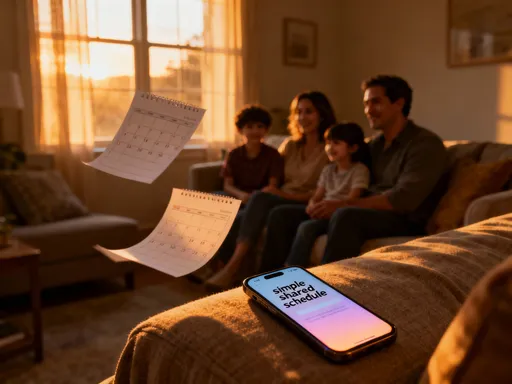
That’s why using the whiteboard at night became our ritual. Instead of lying there in silence, each lost in our own thoughts, we’d open the board together. Sometimes on our phones, sometimes on a tablet in bed. We’d review the week, add new things, shift plans. It wasn’t a formal meeting—it was more like a quiet conversation with a shared canvas. No raised voices. No last-minute surprises. Just two people, side by side, making sense of life together.
And because it was low-pressure, we were more patient. If something came up—like a last-minute work trip or a sick child—we could adjust the board without panic. We’d move things around, reassign tasks, add notes like ‘I’ve got this’ or ‘Let’s switch drop-offs.’ The board didn’t solve everything, but it gave us a calm way to handle it. Over time, I noticed something beautiful: our arguments about forgotten tasks faded. Not because we suddenly became perfect, but because we stopped assuming the worst. We could see each other’s efforts. And that built trust.
Turning Tasks into Togetherness
At first, the whiteboard was just practical. A place for grocery lists, school forms, and vet appointments. But slowly, it became something more. It turned into a shared language—one made of colors, emojis, and little notes that said, ‘I thought of you.’
We started color-coding: blue for me, green for him, yellow for the kids. A red sticky note meant urgent. A heart emoji next to a chore meant ‘I did this for you.’ When I saw he’d added ‘Got milk!’ with a coffee cup doodle, I smiled. When he saw I’d moved his gym day to avoid a work call, he texted, ‘You’re the best.’ These weren’t grand gestures. They were tiny acts of care, made visible.
And that visibility changed everything. Before, I’d say, ‘Did you take out the trash?’ and he’d say, ‘I thought you did.’ Now, I could just check the board. If it was done, great. If not, I’d add a gentle reminder: ‘Trash day tomorrow :)’ No tension. No nagging. Just clarity. The kids even got involved—adding their homework deadlines or drawing little stars when they finished a project. It became our family’s living document, always evolving, always reflecting who we were.
One night, my daughter said, ‘Mom, can we add a ‘family fun’ section?’ So we did. Now there’s a corner of the board just for ideas: ‘Movie night,’ ‘Bake cookies,’ ‘Stargazing.’ We don’t always do them, but just seeing them there makes us feel more connected. Because it’s not just about what we have to do. It’s about what we want to do—together.
Safety Through Shared Awareness
One of the most unexpected benefits of the whiteboard was how it made us feel safer. Not in a dramatic way, but in the quiet, everyday moments that matter. You know the feeling—when someone’s running late, and your mind starts to spiral. Where are they? Are they okay? Did something happen?
We added a simple ‘Where We Are’ section. Nothing fancy. Just a note like ‘Dad at soccer practice with Jake—back by 7:30’ or ‘Mom at grocery store—will text when on way home.’ At first, it felt a little silly. But then, one rainy evening, my phone died while I was out. When I got home, my partner said, ‘I wasn’t worried because I saw your note on the board.’ That small line had given him peace of mind. And that meant everything.
We also added emergency contacts—just names and numbers, neatly listed. The kids know where to find them. We included our pediatrician, the neighbor who can let the dog out, even the after-hours locksmith. It’s not that we expect anything to go wrong. It’s that knowing we’re prepared makes us feel stronger as a family.
Even our parents got involved. My mom started adding little check-in notes: ‘Called to say hi—everyone okay?’ or ‘Left soup on the porch!’ It became a way for her to stay connected without calling late. And for us, it was comforting to know she was looking out for us. The board wasn’t just about tasks—it was about care, connection, and calm.
Choosing the Right Tool Without the Tech Stress
I tested seven different online whiteboards before finding the one that worked for us. Some were too complex, full of features I didn’t need. Others wouldn’t open on my old phone. A few crashed when we added too many sticky notes. I get it—technology can feel overwhelming, especially when you just want something simple to help your family.
So here’s what I learned: you don’t need the fanciest app. You need one that’s easy to use, works on any device, and doesn’t require a tutorial. Look for things like drag-and-drop editing, the ability to add text, drawings, and images, and—most importantly—real-time syncing. That way, when your partner adds a note, you see it instantly.
We ended up choosing one that lets us access the board even without Wi-Fi. That was important for us—sometimes the internet goes out, but we still want to check the plan. We also liked that it has password protection. Not because we’re hiding anything, but because it feels good to know our family space is private. And it works on both Android and iPhone, so no one feels left out.
Don’t overthink it. Start with something simple. Invite your partner to try it for one week. Use it for just one thing—like the grocery list. See how it feels. If it’s clunky or confusing, try another. This isn’t about being tech-savvy. It’s about finding a tool that fits your life, not the other way around.
Making It a Habit That Feels Natural
The biggest mistake I made at first? I tried to do it all at once. I created ten sections, color-coded everything, added reminders for every little thing. Within two days, it felt like homework. My partner said, ‘This is nice, but it’s a lot.’ He was right. I had turned a tool for connection into another chore.
So we scaled back. We started with just two things: the weekly meal plan and the family calendar. That’s it. No pressure. No perfection. And slowly, we added more—only when it felt natural. The key was to make it part of our rhythm, not something we had to force.
Now, it’s part of our evening routine. We open the board with our bedtime tea. Sometimes we talk while we update it. Sometimes we do it in comfortable silence. We celebrate small wins—like when the kids remember to add their homework without being asked. We laugh at the doodles. And if we forget to check it one night? No big deal. It’s there when we need it.
If you’re thinking of trying this, my advice is simple: invite, don’t demand. Say, ‘Hey, I found this cool thing—want to try it together?’ Let everyone add in their own way. Maybe your teenager won’t draw hearts, but they might use bold text for urgent stuff. That’s okay. It’s not about uniformity. It’s about inclusion.
It’s Not About Productivity—It’s About Peace
In the end, the whiteboard didn’t save our family because it was high-tech. It helped because it gave us a shared space—one where we could be seen, heard, and connected. It didn’t give us more hours in the day. But it gave us more presence in the ones we have.
That quiet time together, updating the board, became a moment of intimacy. Not in the romantic sense, but in the deep, everyday way that matters just as much. It’s the look my partner gives me when he sees I moved his dentist appointment to avoid a meeting. It’s the way my daughter says, ‘Mom, I added my science fair date!’ like she’s proud to be part of the plan.
We still have busy days. We still forget things sometimes. But now, we’re not scrambling in the dark. We’re in it together, with a little light guiding the way. And that makes all the difference.
So if you’re lying awake tonight, mentally running through tomorrow’s to-dos, know this: you don’t have to hold it all in your head. There’s a simpler way. A kinder way. One that doesn’t just organize your week—but brings your family a little closer, one sticky note at a time.