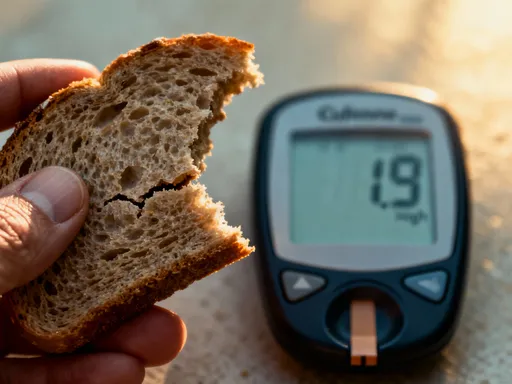
Blood Sugar Blues? How I Nearly Tanked My Health with “Healthy” Diet Mistakes
Managing blood sugar feels like walking a tightrope—too high, too low, and everything in between matters. I thought I was doing everything right: eating whole grains, avoiding sugar, loading up on fruit. But my levels stayed stubbornly off track. Turns out, many of us unknowingly follow dietary habits that backfire. This is what I learned the hard way—and how real change finally happened. For years, I believed I was making smart, health-conscious choices. I swapped white bread for whole grain, replaced soda with fruit juice, and filled my plate with sweet potatoes and oats. I avoided candy and baked goods, proud of my discipline. Yet, despite these efforts, I felt constantly tired, irritable, and mentally foggy. My doctor’s reports confirmed it: my fasting glucose was creeping up, and my HbA1c level—measuring average blood sugar over three months—was edging into the prediabetic range. How could this be? I wasn’t eating junk. I wasn’t sedentary. The answer, I would soon discover, lay in the subtle but powerful ways everyday 'healthy' foods were affecting my metabolism. This journey taught me that managing blood sugar isn’t just about avoiding sugar—it’s about understanding how all foods interact with your body’s insulin response. It’s about redefining what 'healthy' really means for your unique physiology.
The Wake-Up Call: When “Healthy” Eating Didn’t Work
For nearly a decade, I followed what I believed was a textbook approach to healthy eating. My breakfast was steel-cut oats with blueberries and a drizzle of honey—packed with fiber and antioxidants, I told myself. Lunch often included a whole grain wrap with hummus and vegetables, and dinner rotated between brown rice bowls, quinoa salads, and baked sweet potatoes with grilled chicken. I avoided processed snacks, limited alcohol, and walked 30 minutes most days. On paper, it looked like the gold standard of wellness. Yet, I struggled with persistent fatigue by mid-afternoon, mood swings that felt out of character, and a growing sense of mental fogginess that made concentrating difficult. I blamed stress, aging, or poor sleep. It wasn’t until a routine physical revealed my HbA1c was 5.9%—just below the diabetic threshold but clearly elevated—that I realized something was wrong.
My doctor gently pointed out that while my lifestyle choices were generally positive, they might not be aligned with my body’s need for stable blood sugar. She explained that even nutrient-dense carbohydrates could cause gradual glucose elevation if consumed in excess or without proper balance. This was a turning point. I began tracking my blood sugar at home using a continuous glucose monitor, and the results were eye-opening. My levels spiked after meals I considered healthy—especially breakfast. The oats, fruit, and even the 'healthy' granola bar I ate as a snack were causing significant glucose surges, followed by crashes that explained my fatigue and irritability. It wasn’t that these foods were inherently bad; it was that my body wasn’t processing them efficiently. I had to confront a hard truth: popular health advice doesn’t always translate to individual metabolic success. This realization marked the beginning of a more informed, personalized approach to eating—one grounded not in trends, but in evidence and self-awareness.
Pitfall #1: Overloading on “Good Carbs”
One of the most common misconceptions I held—and one widely shared in mainstream nutrition advice—was that complex carbohydrates were essentially 'free' foods. Whole grains like brown rice, oats, quinoa, and ancient grains such as farro and bulgur were seen as virtuous, even essential, components of a balanced diet. Sweet potatoes, squash, and legumes were celebrated for their fiber and nutrients. I embraced them fully, believing I could eat generous portions without consequence. I didn’t count servings or consider glycemic load. After all, they weren’t white bread or pasta—surely they didn’t spike blood sugar the same way. But the data from my glucose monitor told a different story. Meals rich in these so-called 'good carbs' consistently led to glucose peaks within 30 to 60 minutes, often reaching levels comparable to those seen after eating a slice of cake.
The reason lies in carbohydrate density. Even healthy starches contain a significant amount of digestible carbohydrates, which break down into glucose during digestion. While fiber slows absorption slightly, large portions still deliver a substantial glucose load to the bloodstream. This triggers insulin release, and over time, frequent insulin spikes can contribute to insulin resistance—a key driver of type 2 diabetes and metabolic syndrome. Research published in journals such as The American Journal of Clinical Nutrition has shown that high intake of even whole grains, when not balanced with protein and fat, can elevate postprandial glucose in insulin-sensitive individuals. I learned that 'healthy' doesn’t mean 'limitless.' My turning point came when I started measuring portions: a half-cup of cooked oats instead of a full bowl, a quarter-cup of quinoa instead of a heaping serving. More importantly, I began pairing these carbohydrates with protein—such as eggs, Greek yogurt, or cottage cheese—and healthy fats like nuts, avocado, or olive oil. This combination slowed glucose absorption, blunting the spike and sustaining energy longer. Tracking my personal tolerance became essential. What worked for someone else might not work for me—and that was okay.
Pitfall #2: Fruit as a Free Pass
If there was one area where I truly believed I couldn’t go wrong, it was fruit. After all, fruit is natural, full of vitamins, and praised in every nutrition guide. I thought, 'How could apples, bananas, and grapes be harmful?' I began juicing them daily—three apples, a banana, and a handful of grapes blended into a 'clean' morning drink. I told myself it was a vitamin boost, a detox, a healthy start. But my glucose monitor showed a sharp spike within 20 minutes of drinking it. My blood sugar shot up to 160 mg/dL—well above the optimal post-meal target of 140 mg/dL. I was stunned. How could something so natural cause such a dramatic response?
The answer lies in fructose, the primary sugar in fruit. Unlike glucose, which can be used by nearly every cell in the body, fructose is metabolized almost entirely in the liver. When consumed in excess—especially in liquid form, which delivers sugar rapidly without the buffering effect of fiber—it can overwhelm the liver’s capacity, leading to increased fat production, inflammation, and reduced insulin sensitivity over time. Studies from institutions like the University of California, San Francisco, have linked high fructose intake to non-alcoholic fatty liver disease and metabolic dysfunction, even in people of normal weight. Juicing removes most of the fiber, turning a whole food into a concentrated sugar beverage. Eating a whole apple is very different from drinking the juice of three apples. I also realized that not all fruits are created equal. Bananas, grapes, and mangoes are high on the glycemic index, while berries, kiwi, and green apples have lower sugar content and higher fiber. My shift wasn’t about eliminating fruit, but about choosing wisely. I switched to a small handful of berries, often paired with plain Greek yogurt or a few almonds. I ate fruit later in the day, after a meal with protein and fat, to minimize glucose impact. And I stopped juicing altogether. These small changes led to noticeably flatter glucose curves and more stable energy levels.
Pitfall #3: Hidden Sugars in Disguise
One of the most frustrating discoveries in my journey was realizing how many foods I considered healthy were secretly loaded with sugar. I prided myself on avoiding candy and soda, yet I was unknowingly consuming the equivalent of several teaspoons of sugar in a single serving of seemingly innocent products. Flavored yogurt was a prime offender. I loved the convenience of a fruit-on-the-bottom cup, believing it was a nutritious snack. But a single 6-ounce container often contained 15 to 20 grams of sugar—equivalent to four or five teaspoons—much of it added. Granola bars, marketed as wholesome and energy-boosting, were another trap. Many contain honey, brown rice syrup, or cane sugar as top ingredients, making them little more than dessert bars in disguise. Even salad dressings, marinara sauces, and 'low-fat' soups often have added sugars to enhance flavor and texture.
The turning point came when I committed to reading every ingredient label. I was shocked to see sugar listed under so many names: sucrose, high-fructose corn syrup, agave nectar, evaporated cane juice, maltodextrin, and more. The more I looked, the more I realized how pervasive added sugars are in processed foods. The American Heart Association recommends no more than 25 grams of added sugar per day for women, yet many 'healthy' packaged foods contain half that amount in a single serving. My strategy shifted toward choosing plain, unsweetened versions and customizing them at home. I switched to plain Greek yogurt and added my own fresh berries or a sprinkle of cinnamon. I began making homemade granola with nuts, seeds, and a small amount of maple syrup, controlling the sugar content. I started cooking more meals from scratch, using herbs, spices, and vinegar to flavor dishes instead of sugary sauces. This not only reduced my sugar intake but also improved the overall quality of my diet. Awareness became my greatest tool—once I knew what to look for, I could make informed choices that truly supported my health goals.
Pitfall #4: Skipping Meals to Control Glucose
In an effort to 'reset' my metabolism, I experimented with intermittent fasting—skipping breakfast and delaying my first meal until noon. I had read that fasting could improve insulin sensitivity and promote fat burning. At first, I felt a sense of accomplishment and even noticed some weight loss. But within a few weeks, I began to notice troubling patterns. My morning glucose readings, taken just before eating, were higher than ever—sometimes reaching 110 to 120 mg/dL, despite not having eaten for 14 hours. I felt jittery, anxious, and hungry by mid-morning, only to crash after my first meal. My continuous glucose monitor revealed something unexpected: my blood sugar was spiking more after eating when I fasted, compared to days when I ate breakfast.
The explanation lies in the body’s stress response. When fasting extends too long, especially in individuals with existing insulin resistance, the body releases counter-regulatory hormones like cortisol and glucagon to maintain energy supply. These hormones signal the liver to produce glucose, leading to elevated fasting blood sugar—a phenomenon known as the dawn effect or rebound hyperglycemia. This can mimic insulin resistance and make glucose control more difficult. Research in The Journal of Clinical Endocrinology & Metabolism has shown that prolonged fasting without proper medical supervision can disrupt glucose regulation in susceptible individuals. I realized that skipping meals wasn’t giving my body a break—it was stressing it. My new approach focused on consistency. I began eating within one to two hours of waking, starting with a balanced meal that included protein, healthy fats, and a modest amount of complex carbohydrates. This stabilized my morning glucose, reduced cravings, and improved my energy. I still practice time-restricted eating occasionally, but only in a 12-hour window (e.g., 8 a.m. to 8 p.m.) and only when my stress levels are low and my sleep is consistent. The key was balance—not deprivation.
Pitfall #5: Ignoring the Power of Food Order
One of the simplest yet most powerful changes I made had nothing to do with what I ate—but rather, the order in which I ate it. For years, I followed the same pattern: start with bread or rice, then move to protein and vegetables. It seemed logical—save the best for last. But research suggests this habit may be contributing to blood sugar spikes. A growing body of evidence, including studies from Weill Cornell Medicine, shows that eating fiber-rich vegetables and protein before carbohydrates can significantly reduce post-meal glucose and insulin levels. In one clinical trial, participants with type 2 diabetes who ate vegetables and protein first, followed by carbohydrates 15 minutes later, experienced a 74% reduction in postprandial glucose spikes compared to those who ate carbs first.
The mechanism is straightforward: when fiber and protein are consumed first, they slow gastric emptying and stimulate the release of gut hormones that regulate insulin. This creates a 'buffer' that prevents a rapid influx of glucose into the bloodstream. I began experimenting with this approach at every meal. At lunch, I started with a large salad dressed in olive oil and vinegar, followed by grilled chicken, and saved the quinoa for last. At dinner, I’d begin with roasted broccoli and salmon, then finish with a small portion of sweet potato. Even at breakfast, I’d eat a boiled egg and avocado before touching my oatmeal. The difference was remarkable. My glucose monitor showed much flatter curves, and I felt more satisfied with smaller portions. This simple behavioral shift required no special products, no recipes, and no cost—just awareness and intention. It reminded me that sometimes, the smallest changes can have the biggest impact.
Building Sustainable Dietary Principles That Work
Looking back, my journey wasn’t about finding a perfect diet or achieving flawless glucose numbers. It was about learning to listen to my body, question assumptions, and make informed choices based on evidence and personal experience. I moved away from rigid rules and toward flexible, sustainable principles that support long-term health. The first principle is balance: every meal should include a source of protein, healthy fats, fiber, and a moderate amount of complex carbohydrates. This combination supports stable energy, reduces cravings, and promotes metabolic harmony. The second is timing: eating at regular intervals, avoiding long gaps, and considering food order can make a meaningful difference in glucose control. The third is portion awareness—understanding that even healthy foods can disrupt balance when consumed in excess.
Equally important is personalization. What works for one person may not work for another. Some people tolerate fruit well; others do better with very little. Some thrive on intermittent fasting; others find it disruptive. Continuous glucose monitoring, while not necessary for everyone, was a valuable tool for me—it provided real-time feedback and helped me identify hidden triggers. For those without access to such technology, keeping a food and symptom journal can offer insights. I also learned to seek guidance from healthcare professionals, including registered dietitians and endocrinologists, who could help interpret lab results and tailor recommendations. This journey taught me that managing blood sugar is not about perfection—it’s about progress, awareness, and consistency. It’s about making small, sustainable changes that add up over time. And most importantly, it’s about viewing food not as the enemy, but as a powerful ally in the pursuit of lasting health. These lessons have not only improved my glucose levels but have also deepened my respect for the complexity of the human body—and the wisdom of listening to it.